Bedding care
Duvet Cover Care: Washing, Drying, and Protecting Closures
A duvet cover is the bed’s most hardworking layer: it softens the look of a room, protects the insert beneath it, and meets the daily rhythms of sleep. A thoughtful laundry routine can keep it feeling inviting while helping its fabric, buttons, zipper, and ties hold up wash after wash.
Published November 24, 2026
Duvet covers are generally simpler to launder than a filled comforter, but they are not all cared for in the same way. A crisp cotton percale cover, a smooth sateen, a brushed flannel, and a linen blend each respond differently to water, agitation, heat, and handling. Even within one fiber family, a finish, weave, dye, or set of closures can change the best approach.
The most dependable guide is the care label attached to the cover. Use its instructions as your starting point, then make a few small adjustments that reduce friction: close fasteners before washing, keep the load manageable, choose a suitable cycle, and take the cover out of the dryer promptly. These habits are uncomplicated, but they can make a visible difference to bedding maintenance over time.
Start with the care label, not a universal rule
Before washing duvet covers, check the label for the recommended water temperature, cycle, drying method, and any restrictions on bleach or ironing. If the label is missing, look for care information from the maker and consider the material and construction. When uncertain, a cooler wash and gentler handling are often a cautious first choice, but they are not a substitute for specific instructions—particularly for delicate fibers, special finishes, or decorative details.
Read the full label rather than focusing only on the temperature. “Machine washable” does not necessarily mean “wash on a normal cycle and tumble dry on high.” A cover may be washable but still require a delicate cycle, low heat, or line drying. Some fabrics are also more susceptible to shrinkage, color loss, or surface wear when exposed to excess heat or vigorous agitation.
It is useful to distinguish between a duvet cover and the insert it encloses. The cover is typically the removable, washable layer. The insert may have its own care requirements, which can be very different. Remove the insert before laundering the cover, and do not assume that the insert can be washed simply because the cover can.
Prepare the cover before it goes into the washer
A few minutes of preparation help prevent the small details from becoming the weak points in a laundry cycle. First, take the cover off the insert and give it a gentle shake to release loose lint and debris. Check the corners, seams, and closure area for loose threads or small tears. If a seam is beginning to open, repair it before washing when possible: a washer can put additional strain on an already vulnerable area.
Next, fasten the closure. Button the buttons, close the zipper, or secure any snaps according to the maker’s instructions. This helps prevent the opening from catching on other items and keeps the closure from striking the drum repeatedly. Do not force a stiff zipper or button that appears damaged. If the fastener is already loose, consider a small repair before laundering rather than asking it to withstand another cycle.
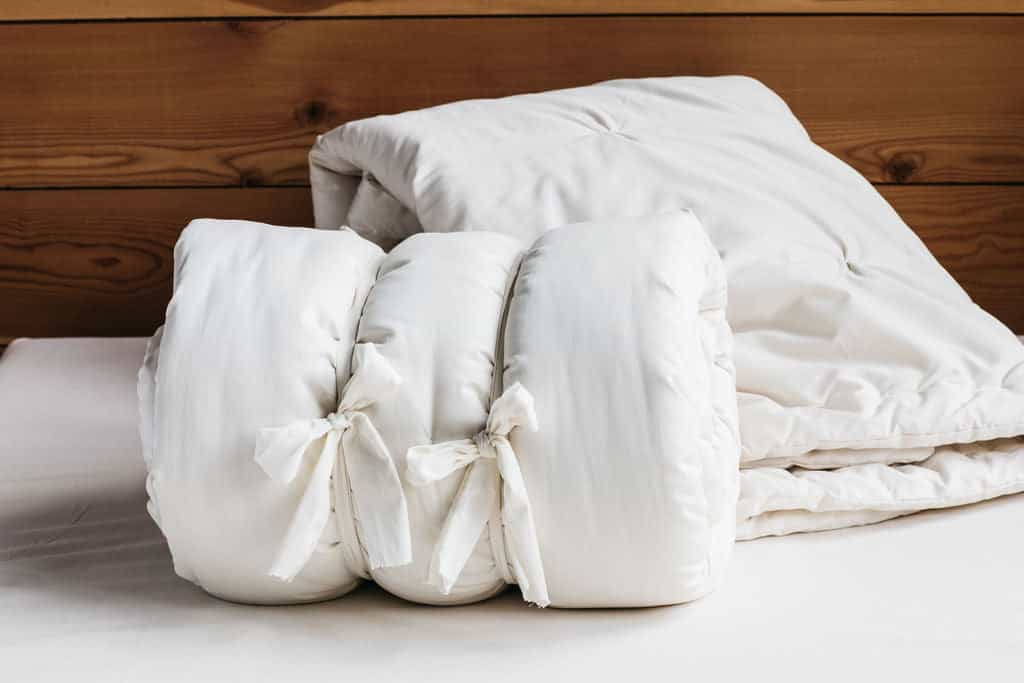
Many duvet covers have interior ties intended to attach to loops on the insert. Tie the loose ends together loosely, or secure them in a way that keeps them from winding around other laundry. Avoid making a tight knot that is difficult to undo or could pull at the fabric. The goal is simply to reduce tangling, not to stress the ties or their attachment points.
Turn the cover inside out if its care instructions permit. This can reduce rubbing on the face of the fabric and help preserve a decorative finish. If the cover has embroidery, piping, delicate trim, or a particularly smooth surface, placing it in a large laundry bag may offer additional protection, provided the cover still has room to move and rinse properly.
Give the fabric room to move
Overloading the washer is one of the easiest ways to make laundry harder on bedding. A duvet cover needs room to circulate through water and detergent. If it is crammed into the drum with towels, clothing, and sheets, it may twist into a dense bundle, rinse unevenly, or put extra strain on closures and seams.
Wash a bulky cover by itself or with a modest amount of compatible bedding. Keep colors together and consider separating items with rough hardware, hooks, or abrasive textures. Towels can shed lint and add considerable weight when wet, so they are not always ideal companions for a smooth duvet cover. Follow the machine manufacturer’s loading guidance as well as the fabric-care instructions.
Use a detergent suitable for the fabric and the washer. More detergent is not necessarily better: excess product can remain in the cloth, dull its feel, or require additional rinsing. Measure according to the detergent directions and adjust for load size and water conditions where the instructions advise. Avoid adding fabric softener automatically, especially when the care label advises against it or when a finish may be affected.
Choose a cycle and temperature with care
For many everyday cotton covers, a regular or gentle machine cycle may be appropriate, depending on the label and the garment’s construction. More delicate fabrics and detailed covers usually benefit from less agitation. If the washer has a bedding setting, check what that setting actually does; a cycle name is not a guarantee that it suits every textile.
Water temperature should follow the label. Cooler water can be a prudent option for color retention and may reduce the chance of heat-related shrinkage, but it may not be suitable for every cleaning need or every fabric. Warm water may be permitted for some sturdy cottons, while certain dyes, finishes, or delicate materials call for a cooler wash. Do not increase the temperature simply to make a routine wash feel more thorough.
For a fresh stain, address it before washing when the care instructions allow. Blot rather than rub, and test any stain treatment on an inconspicuous area first. Aggressive scrubbing can roughen fibers or spread a mark. Avoid combining cleaning products, and never mix chlorine bleach with ammonia or other cleaners. If you use a pretreatment, follow its directions and the cover’s care label.
Care notes for common duvet-cover fabrics
Fabric names offer useful clues, but the label remains the authority. These general distinctions help explain why bedding care is not one-size-fits-all.
- Cotton percale: Often chosen for its crisp, cool hand, percale can usually be machine washed when the label permits. Avoid excessive heat if the instructions warn of shrinkage, and remove it promptly from the dryer to limit pronounced creasing.
- Cotton sateen: Its smooth surface can benefit from gentle handling and like-color washing. Use the temperature and drying settings on the label; high heat and rough, crowded loads may affect the finish or encourage wear.
- Flannel: A brushed surface can collect lint, so washing with similar fabrics may help. Follow the label’s temperature and dryer guidance, and avoid over-drying, which can make a cover feel less supple over time.
- Linen and linen blends: Linen can crease naturally, and some covers are designed to retain a relaxed texture. Check whether the item is machine washable and whether it may shrink. Gentle washing and prompt removal can help preserve its drape.
- Silk or other delicate textiles: Do not assume these are machine washable. Follow specific care instructions closely; professional cleaning may be recommended for some constructions.
Drying: protect the fabric and the closures
Once the wash is complete, remove the cover without yanking it by the opening or ties. Gently untwist it and give it a light shake. This helps restore its shape and makes it easier to dry evenly. If the care label permits tumble drying, choose the recommended heat setting. Lower heat can be gentler, but the label’s directions should take precedence.
Take the cover out when it is dry rather than leaving it to tumble for an extended period. Prompt removal helps limit deep creases and unnecessary heat exposure. Smooth the fabric with your hands, paying attention to the corners and closure edge, then fold it or put it back on the bed. A cover that is slightly damp should not be stored away; allow it to dry fully to reduce the chance of mustiness.
If the label recommends line drying, use a clean, sturdy line or rack and distribute the weight so that one seam is not carrying the entire load. Avoid hanging a heavy, wet cover from a narrow corner or a delicate tie. Depending on the fabric and the drying conditions, turning or repositioning the cover can help it dry more evenly. Keep it away from surfaces that could transfer dirt or color.
High heat can be hard on many fabrics and may affect fit, texture, or closure components. If a cover emerges from the dryer with deep wrinkles, use the ironing or steaming guidance on its label rather than applying heat indiscriminately. Some fabrics are meant to look relaxed; a softer, lived-in finish is not necessarily a sign that the cover needs aggressive pressing.
Keep buttons, zippers, and ties in good condition
Closures work quietly in the background until one fails. Protecting them begins before the wash: close the buttons or zipper, gather interior ties, and avoid an overloaded drum. During unloading, handle the opening rather than pulling hard on a single button or loop. These simple steps help reduce snagging and repeated impact.
After drying, check the closure while the cover is still easy to handle. Look for a button that is beginning to loosen, a zipper that catches, or ties with frayed ends. Small repairs are easier before the next laundry day. Keep spare buttons, where available, with household sewing supplies, and do not force a zipper if fabric has become trapped in its teeth.
If a cover uses buttons, fasten them gently rather than stretching the buttonholes. For a zipper, guide the slider along the track without pulling the fabric taut. Interior ties should be tied to the insert’s corresponding loops only as securely as needed to keep the insert in position. Overly tight knots can strain the tie or make removal unnecessarily difficult.
How often should a duvet cover be washed?
There is no single schedule that suits every household. Consider how the bed is used, whether the cover is protected by a top sheet, the season, and any personal or household needs. A cover that is used directly against the skin may need washing more often than one layered over a sheet. Follow any relevant advice from a healthcare professional when specific sensitivities or care needs apply.
Between washes, airing the bedding and keeping the bed dry can support a fresher-feeling bedroom. Address spills promptly and use the duvet cover as intended: it is a removable barrier that can be laundered more easily than many inserts. If the insert itself becomes soiled, consult its own care label rather than treating the cover’s instructions as applicable to both layers.
Store a clean cover thoughtfully
Before storing a duvet cover, make sure it is completely dry. Fold it loosely and place it in a clean, dry cupboard or drawer with enough room to avoid crushing it into a tight bundle. Keep it away from damp areas and direct sources of heat. If storing a seasonal cover for several months, use a breathable storage arrangement where practical and avoid sealing in residual moisture.
It can be helpful to store matching pieces together, but do not use an elastic band or tight tie around the folded fabric. Keep the closure from pressing sharply against delicate areas, and leave buttons fastened or zippers closed so the opening does not catch on other linens. A tidy storage habit makes the next changeover easier and helps the cover remain ready for use.
A simple duvet-cover laundry checklist
- Read the care label and check the recommended wash and dry settings.
- Remove the insert and inspect seams, corners, and closures.
- Fasten buttons or zippers and gather loose interior ties.
- Wash with compatible colors and fabrics, leaving room in the machine.
- Use an appropriate amount of detergent and avoid unapproved additives.
- Dry according to the label and remove the cover promptly when finished.
- Confirm that the cover is fully dry before folding or storing it.
- Check buttons, zipper movement, and ties for signs of wear.
The quiet luxury of good care
Well-kept bedding does not depend on complicated routines. It comes down to reading the label, giving fabric space, and treating small details with a little attention. Cotton percale may call for a different touch than sateen or flannel, and a cover with a zipper may need slightly different preparation than one with buttons and ties. The best approach is the one that respects the material and construction in front of you.
With a careful wash, measured drying, and occasional checks of its closures, a duvet cover can remain comfortable, easy to handle, and ready for regular use. These small laundry tips help preserve the hand and fit of the fabric while making bedding maintenance feel less like a chore and more like part of keeping a bedroom calm, clean, and welcoming.