Bedding · Fabric & Care
Percale vs. Sateen: How Naturepedic Cotton Weaves Differ in Feel and Care
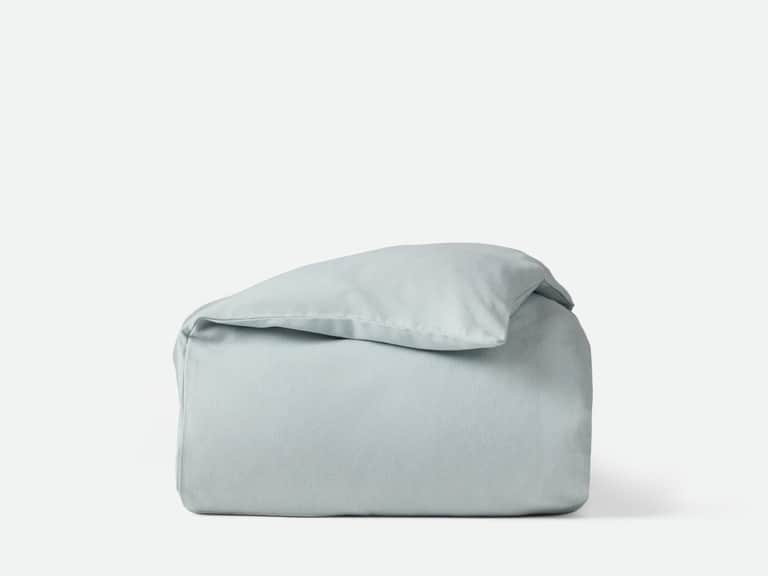
A duvet cover can change the entire mood of a bed. Percale brings a crisp, airy finish; sateen offers a smoother hand and more fluid drape. Both can be made from organic cotton, but their different weave structures shape how they feel, how they fall, and what to keep in mind on laundry day.
Published November 7, 2026
Choosing bedding is often described in terms of color, thread count, or the elusive promise of hotel-like softness. Yet one of the most useful distinctions is quieter: the weave. Two duvet covers can be made from cotton grown and processed to similar standards and still feel noticeably different against the skin because their yarns cross in different patterns.
That is the essential difference between percale and sateen. Percale is known for a crisp, matte surface and a light, breathable feel. Sateen is typically smoother, with a gentle sheen and a softer drape. Neither is universally better. The right choice depends on what you enjoy when you climb into bed, how warm you tend to feel overnight, and the kind of finish you want in the room.
Naturepedic’s organic cotton bedding offers a useful point of reference. Its organic cotton percale duvet cover set is described as a crisp, breathable 300-thread-count fabric, while the organic cotton sateen duvet cover uses long-staple cotton in a 400-thread-count construction. Those numbers describe different fabrics, not a simple contest in which the higher figure automatically wins. The weave and the cotton itself matter just as much.
Understanding the distinction makes it easier to choose by feel rather than by marketing shorthand—and to care for each piece in a way that preserves its character.
First, the weave: a small structural difference with a visible effect
Woven fabric is formed where lengthwise yarns, called warp, cross widthwise yarns, called weft. The arrangement of those crossings influences a fabric’s surface, flexibility, and appearance. Percale and sateen are both cotton weaves; they simply organize those crossings differently.
Percale uses a balanced one-over, one-under pattern. Each yarn passes over one crossing yarn, then under the next, creating a closely interlaced, even surface. That structure gives percale its familiar crispness and matte finish. It has a clean, tailored look rather than a glossy one, and its hand is often compared to a freshly pressed cotton shirt.
Sateen uses a satin-style weave in which a yarn passes over several crossing yarns before going under one. On the face of the cloth, longer sections of yarn are visible. This creates a smooth surface that reflects light more softly and allows the fabric to fall with a supple, fluid quality. The result is not silk, despite the similar-sounding name: sateen is cotton, with a cotton weave and cotton’s familiar natural-fiber feel.
These structural differences are useful shorthand, not an absolute guarantee of how every fabric will feel. Fiber quality, yarn construction, finishing, and laundering all play a part. A high-quality percale may become more inviting with use, while sateen’s softness can vary from one fabric to another. When possible, consider the full description and care instructions rather than treating a weave name as the whole story.
Percale: crisp, composed, and open to the air
Percale’s appeal is its sense of freshness. The fabric feels smooth but not slippery, with a dry, crisp hand and a restrained, matte appearance. It tends to hold a neat outline on the bed, lending the room a calm, polished quality: the kind of finish that looks considered without appearing overly styled.
Because percale’s balanced weave leaves the fabric relatively light and breathable, many sleepers find it comfortable in warmer bedrooms or during warmer seasons. It is also a common favorite for people who prefer a cool-feeling sheet or duvet cover. Air circulation is only one element of sleep comfort, of course; room temperature, the comforter insert, and personal preference also matter. Still, the weave’s airy character is one reason percale is often associated with a fresher, less enveloping feel.
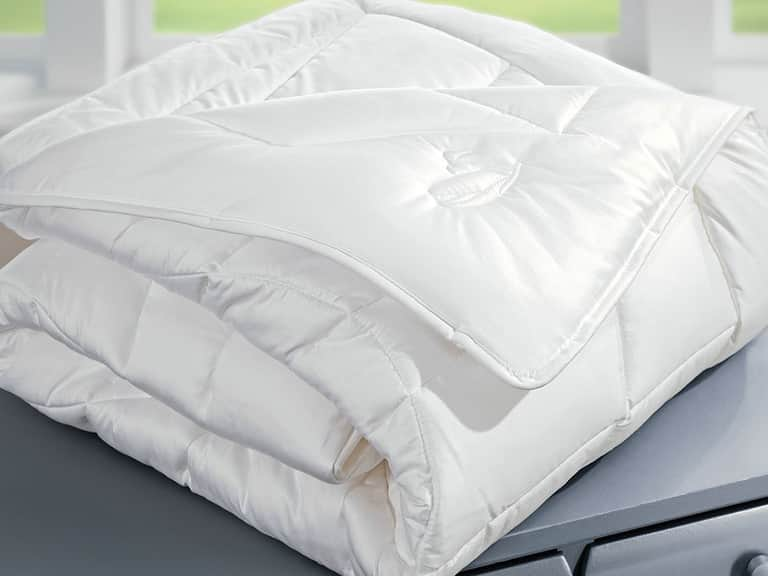
Naturepedic’s organic cotton percale cover set is described as a 300-thread-count fabric with a crisp, breathable texture and a matte finish. Corner ties are included to help secure the insert, and the set is offered in a simple color range. The fabric is also described as becoming softer with washing while retaining its characteristic crispness. For someone drawn to a cool, clean-lined bed, those details may be more useful than a thread-count comparison alone.
Percale is not meant to feel plush in the way a brushed fabric does. Its appeal is subtler: lightness, a crisp surface, and a comfortable sense of air. If you love a smooth, silky sensation, sateen may feel more immediately inviting. If you prefer bedding that feels freshly laundered and never too weighty, percale may be the more natural fit.
Sateen: a softer drape and a quiet sheen
Sateen makes a different first impression. Its surface is generally smoother and silkier to the touch, and its more flexible drape gives bedding a relaxed, softly polished look. The finish catches light gently, rather than reflecting it sharply. That touch of luminosity can make a bed feel a little more dressed, even in a pared-back room.
Because sateen often feels more substantial and close against the skin than percale, some sleepers find it especially appealing in a cool room or during colder months. It is not automatically warmer in every circumstance, and it is still cotton rather than a thermal layer. But the smoother, more enveloping hand can create a different impression of comfort—one that feels less crisp and more cocooning.
Naturepedic describes its organic cotton sateen duvet cover as made from long-staple, GOTS-certified organic cotton, with a 400-thread-count fabric and a subtle sheen. Its four-over-one weave is designed to create a gentle drape and natural wrinkle resistance. The cover has corner ties and is described as breathable and moisture-wicking, with a care routine that includes machine washing warm and tumble drying low. As with any bedding, the sewn-in label should take precedence if it differs from a general product description.
For a bedroom with layered textures, sateen can bring a sense of softness and polish. It pairs beautifully with a simple quilt, a textured blanket, or crisp percale pillowcases. Conversely, a full sateen set creates a more continuous, smooth-looking surface. The choice is not merely about temperature: the visual and tactile mood of the room matters, too.
What thread count can—and cannot—tell you
Thread count is the number of threads counted within a square inch of fabric, usually including the lengthwise and crosswise yarns. It can offer a point of comparison when fabrics are made with similar fibers and counting methods, but it does not measure comfort by itself. A higher number does not automatically mean better quality, greater breathability, or a more durable duvet cover.
Weave affects how those threads sit together. A 300-thread-count percale and a 400-thread-count sateen are not competing versions of the same fabric; they are distinct constructions with different surface effects. The percale’s one-over-one-under pattern contributes to crispness and airflow, while sateen’s longer floats create smoothness and a soft sheen. Fiber length, yarn quality, finishing, and construction all add to the final result.
It can be more helpful to ask a few direct questions: Do you like a crisp or silky hand? Do you want a matte finish or a subtle luster? Does your bedroom tend to feel warm, cool, or changeable? Is easy routine washing important? These questions get closer to everyday satisfaction than chasing a single number on a label.
Organic certification is another separate consideration. A certification such as GOTS concerns defined standards for organic textiles and their processing; it does not determine whether a fabric is percale or sateen, nor does it dictate which one will feel better to you. Weave describes construction. Certification describes standards and production criteria. Keeping those ideas distinct makes bedding labels easier to interpret.
How to choose for your own sleep and style
Start with the feeling you want at bedtime. If you like a cool, crisp surface and a light, airy impression, percale is a strong candidate. If you gravitate toward a smoother touch, fluid folds, and a slightly more polished look, sateen may be more appealing. Neither preference is more sophisticated; both are simply different expressions of cotton.
Then consider your sleep environment. Warm sleepers and people who keep their bedrooms well heated often lean toward percale because of its breathable, crisp feel. Those who prefer a more enveloping hand—or who sleep in a cooler room—may be drawn to sateen. Treat these as tendencies rather than rules. A duvet insert can influence warmth far more than the cover alone, and bedding comfort is personal.
Think about the rest of the bed, too. Percale’s matte surface works especially well with a relaxed, understated arrangement: smooth sheets, a lightweight cover, and a textured throw. Sateen can bring softness and a subtle glow to a more tailored scheme, or soften a room dominated by crisp lines. Mixing weaves is entirely reasonable. A percale sheet beneath a sateen duvet cover, for example, lets you enjoy coolness close to the mattress and a softer finish on top.
Finally, choose for the life you actually lead. A fabric that must be handled in a way that feels burdensome may not be the right everyday choice, however beautiful it looks on the bed. Review the product label before buying, especially if you prefer a particular wash temperature or need to avoid ironing. Good bedding should feel appealing in use, not simply on the day it arrives.
Everyday care for organic cotton duvet covers
Both percale and sateen are cotton fabrics, and sensible laundering habits help preserve their feel. The most important rule is also the least glamorous: follow the care label. Different finishes, colors, trims, and constructions can require different instructions, even when two items share the same fiber and weave.
- Wash before first use when directed. A first wash can remove packaging residue and help the fabric settle into its ordinary feel. Follow the care label for temperature and cycle selection.
- Use a gentle approach. A moderate amount of mild detergent and a suitable cycle are generally preferable to harsh treatment. More detergent does not mean cleaner fabric; excess can be harder to rinse away.
- Separate similar colors. Washing like colors together helps limit color transfer, particularly with new or deeply colored bedding. Avoid overloading the machine so the duvet cover can move freely.
- Choose drying settings carefully. High heat can stress cotton fibers and may encourage shrinkage. If the label permits tumble drying, a lower setting is often a gentler choice. Remove the cover promptly to help limit creasing.
- Close fastenings and use corner ties. Secure buttons or other closures before washing, and tie loose interior fasteners where practical. This can help prevent the cover from twisting around other laundry.
- Store bedding fully dry. Make sure cotton is completely dry before folding it away. Keep it in a clean, dry cupboard, away from damp conditions.
Naturepedic’s cited percale and sateen duvet covers are both described as suitable for machine washing, with warm washing and low tumble drying specified for the sateen cover and for the percale set. The details of a particular product label remain the final authority. If you are caring for a different color, size, or product version, verify its instructions rather than assuming every cotton cover has identical requirements.
Preserving the feel: wrinkles, softness, and wear
Cotton wrinkles are part of the material’s natural behavior. Percale’s crisp finish may show creasing more clearly, while sateen’s smooth drape can make wrinkles appear softer, though neither fabric is entirely wrinkle-proof. Removing bedding from the dryer promptly and smoothing it while it is still warm can help. If a product label allows ironing, use the recommended setting and avoid applying more heat than necessary.
It is also worth resisting the impulse to overcorrect. A few soft folds are not evidence of poor care; they are often simply the look of lived-in cotton. If a perfectly smooth finish is important, ironing or careful line drying may be appropriate, provided the manufacturer’s care directions allow it. For everyday use, a relaxed surface can be part of the charm.
With time, cotton bedding can change in hand. Percale is often described as softening through repeated laundering while keeping a crisp character. Sateen may maintain its smooth, fluid feel when cared for gently. The pace and degree of change depend on the fabric, detergent, water, washing frequency, and drying method. Avoid promises that a particular textile will become dramatically softer after a fixed number of washes; bedding does not evolve on a guaranteed schedule.
To extend the life of a duvet cover, rotate it with another cover if you have one, wash it when needed rather than as a ritual after every brief use, and address spills promptly according to the care label. A cover protects the insert from much of the everyday contact that bedding receives, so thoughtful routine care can help both pieces remain in service longer.
A practical comparison at a glance
| Consideration | Percale | Sateen |
|---|---|---|
| Weave | Balanced one-over, one-under construction | Satin-style construction with longer yarn floats on the surface |
| Typical hand | Crisp, smooth, and matte | Smoother, silkier, and more fluid |
| Visual finish | Clean and understated | Soft sheen and gentle drape |
| Often suits | Those who enjoy an airy, cool-feeling surface | Those who prefer a softer, more enveloping feel |
| Care starting point | Check label; wash and dry gently to preserve the fabric | Check label; use the prescribed temperature and lower heat when permitted |
This comparison is a guide, not a verdict. The same weave can feel different depending on the yarn, finish, and construction. Use it to narrow your choices, then let the product details and your own preferences make the final call.
A few common questions
Is percale cooler than sateen?
Percale is commonly associated with an airy, crisp sensation, while sateen often feels smoother and more substantial. That can make percale appealing to warm sleepers. But perceived temperature also depends on the room, the duvet insert, clothing, and individual comfort. No weave can guarantee a particular sleep temperature.
Does sateen mean the fabric is satin?
No. Sateen is generally cotton woven in a satin-style pattern. The name refers to the structure and surface character, not to silk content. It has a smooth feel and soft sheen, but it remains a cotton textile.
Does a higher thread count mean better bedding?
Not by itself. Thread count is one specification, but it cannot convey the whole feel or quality of the fabric. Compare fiber details, weave, finish, construction, care requirements, and any relevant certifications alongside the number.
Can I wash percale and sateen the same way?
Both are cotton, but their care instructions can differ by product and finish. Always follow the specific label. For the Naturepedic examples discussed here, the product descriptions provide machine-washing and low-tumble-drying guidance; consult the current sewn-in label for the precise item in your care.
The final choice is a question of touch
Percale and sateen offer two distinct ways to make a bed feel finished. Percale is crisp, matte, and airy, with an easy clarity that suits those who like a cooler-feeling surface. Sateen is smooth, softly luminous, and fluid, bringing a more enveloping touch and a gentler drape. Both can be made with organic cotton; neither weave alone determines a textile’s sourcing standards or overall quality.
Naturepedic’s organic cotton percale and sateen covers make the contrast tangible: one emphasizes a breathable, crisp hand, the other a smoother finish and subtle sheen. Look past thread count as a standalone score, check the details of the fabric and its certification, and read the care instructions before deciding.
Then choose the surface you want to meet at the end of the day. Whether the preference is for the clean snap of percale or the soft fall of sateen, the best bedding is the bedding that feels right in your own room—and remains comfortable to care for long after the first beautifully made bed.